
Across Ghana and beyond, small business owners are feeling a new kind of pressure: customers expect faster replies, smoother follow-ups, and fewer mistakes, even when teams are small and budgets are tight. Between supply hiccups, shifting policies, and day-to-day cashflow stress, service delivery challenges can start to look like personal failure when they’re really a systems problem.
Meanwhile, artificial intelligence disruption is quietly resetting the standard, and competitive pressures are rising as bigger players respond faster and stay consistent. The question is no longer whether change is coming, but how business automation needs can be met without losing the human touch.
Understanding Where AI Fits in Daily Work
A simple way to think about AI is as three related tools. Machine learning spots patterns from past data, automation carries out repeat steps, and data-driven insights turn messy information into clearer choices. Together, they help you see what AI can handle reliably, and what still needs human judgment.
This matters because AI is not magic, and it is not a full replacement for good service. When you know the basics, you can choose tools that reduce delays and errors without confusing customers. The AI Index tracks how fast these capabilities are advancing, which helps explain why expectations are shifting.
Think of a busy shop: AI can draft replies, tag common complaints, and remind you to follow up. Yet tone, fairness, and final decisions stay with you, even when operations and supply chain management get smarter.
Use AI This Week: 7 Quick Wins for Faster, Friendlier Service
You don’t need a big “Artificial Intelligence project” to feel results. Pick one repetitive task, set a clear goal (save time, reduce errors, reply faster), and use simple automation to support, not replace, the human touch.
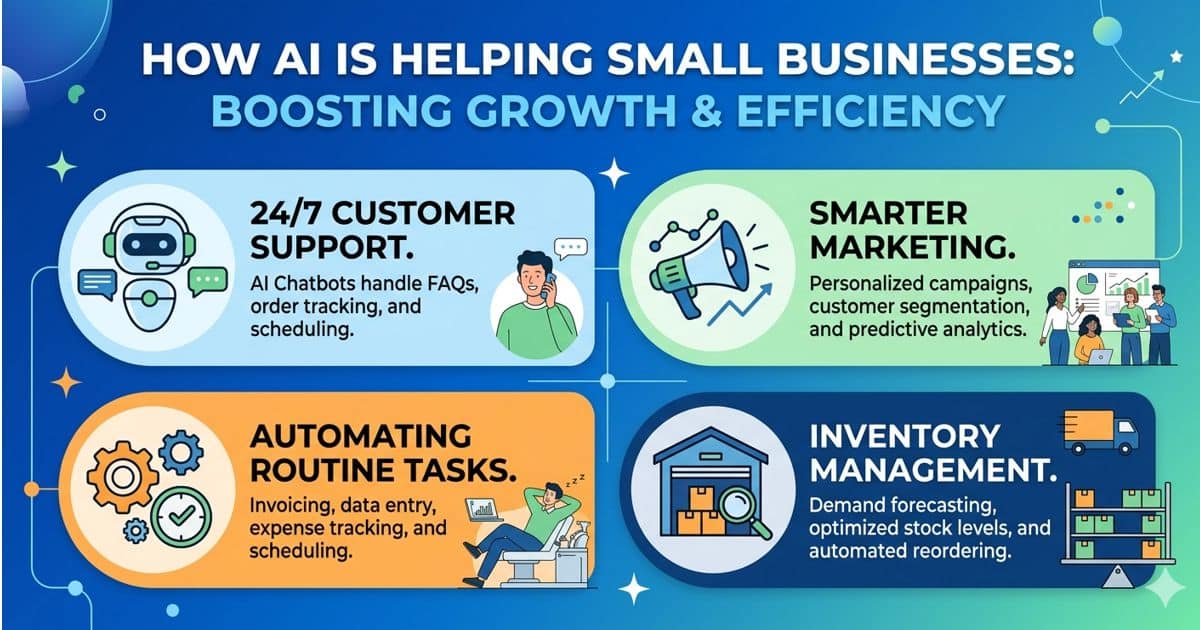
- Create a “first response” helper for messages: Draft 10–15 common customer questions (prices, location, delivery, opening hours, refunds) and ask an AI assistant to turn them into friendly, consistent replies. Keep them as templates your team can personalize in 10 seconds, so customers still feel seen. This boosts customer experience quickly because speed and clarity reduce back-and-forth.
- Add a 24/7 FAQ flow before a human handoff: Set up a basic chat or form that answers the top 5 questions and then routes complex issues to a person. The goal is not to “hide” from customers, it’s to remove simple delays like “What time do you close?” so your staff can focus on nuanced requests. A good rule is to offer a clear “talk to a person” option at every step.
- Turn voice notes and calls into action lists: If your business receives lots of voice notes, meeting calls, or customer calls, use AI transcription to convert them into short summaries and checklists. This is operational efficiency in real life: fewer forgotten details, fewer repeated calls, and faster follow-ups. Create a standard format: “Customer needs / promised time / next step / owner.”
- Automate reminders and follow-ups (without being spammy): Set triggers for common moments: after a delivery, after a service appointment, or 24 hours after an unanswered quote. Keep the message human and helpful, “Checking if you still want this”, and give one clear action button or reply option. This reduces cost through fewer abandoned sales and fewer manual chases
- Use Artificial Intelligence to spot patterns in complaints and returns: Once a week, paste your top complaints, reasons for returns, or low ratings into an AI tool and ask for themes and “top 3 fixes.” You’re applying the “data-driven insights” idea in a beginner-friendly way: you don’t need dashboards to learn what’s breaking trust. Fix one root cause weekly (packaging, unclear pricing, late delivery windows).
- Tighten your internal ops with mini-checklists: Ask Artificial Intelligence to create simple step-by-step SOPs for repeat work like onboarding a customer, processing refunds, or closing the shop. Then test the checklist for one day and edit it with your team. This protects quality when you’re busy and lowers training costs because new staff learn faster.
- Build a small AI advantage, then protect it with your service values: Many leaders believe GenAI can deliver an edge, but the real win comes from combining speed with empathy and reliability. As transitory competitive advantages reminds us, tools alone don’t replace good fundamentals, clear promises, fair policies, and consistent delivery. Write down your non-negotiables (privacy, honesty, escalation to a human) before you automate more.
AI for Small Businesses: Common Worries, Clear Answers
Q: How can small businesses use AI to automate routine tasks without losing the personal touch that customers value?
A: Use AI for the “first draft,” then let a person do the final 10% that shows care: names, context, and tone. Automate simple updates like hours, delivery status, and appointment reminders, and keep an easy “talk to a person” option. Track one service metric weekly, since customer service by 56% shows what’s possible when speed improves.
Q: What are the potential risks and ethical considerations small businesses should be aware of when adopting AI technologies?
A: The big ones are privacy, inaccurate replies, hidden bias, and overpromising what the tool can do. Set guardrails early: never paste sensitive customer details, require human approval for refunds or disputes, and keep short records of what data you collect and why.
Q: In what ways can AI-driven insights help small teams make better decisions and improve customer experiences?
A: Artificial Intelligence can group complaints, returns, and late deliveries into themes so you fix the root cause instead of chasing symptoms. Ask for “top patterns” and “one change to test this week,” then measure results in real numbers like fewer callbacks or faster resolution.
Q: How might small business owners manage the stress and uncertainty that comes with integrating new AI tools into their workflows?
A: Shrink the change: one task, one goal, one week, then review. A clear plan reduces anxiety because AI strategy linked to goals is associated with stronger business results, not just experimentation. Also, name a “human owner” for every automated step so accountability stays clear.
Q: What steps can someone take if they feel stuck or overwhelmed trying to understand and apply AI solutions effectively in their small business environment?
A: Start with a simple map: “Where do we lose time, make errors, or delay customers?” Choose one pain point and write a two-sentence use case before touching any tool. Build confidence through bite-sized learning, such as short online IT courses aligned with industry certifications or information technology degree programs, and practice on non-sensitive data until it feels routine.
AI Service Options Compared at a Glance
This table compares practical ways small businesses can use Artificial Intelligence to improve service and support growth, without turning customer care into a cold, automated script. It matters for readers in Ghana and worldwide because time, staffing, and trust are tight everywhere, and choosing the right approach helps you scale responsibly as many small businesses shift toward AI.
| Option | Benefit | Best For | Consideration |
| AI FAQ chatbot + human handoff | Faster answers for common questions | Hours, pricing, booking, basic policies | Needs clear escalation and weekly review |
| AI-assisted email and chat drafting | Consistent replies in less time | High inbox volume, small teams | Human must edit for tone and accuracy |
| Sentiment and theme analysis | Finds repeating pain points quickly | Returns, complaints, late delivery patterns | Requires enough tagged messages to learn |
| Smart scheduling and reminders | Fewer no-shows and missed follow-ups | Clinics, salons, repairs, lessons | Can feel spammy if too frequent |
If you want the safest starting point, pick tools that support frontline speed while keeping a person in the loop for exceptions. Think of the AI adoption definition as choosing one task to improve, then growing from proof, not hype. Knowing which option fits best makes your next move clear.
Growing Customer Care and Sales with AI, One Small Step
Small businesses often feel torn between keeping service personal and keeping up with digital demands as customers expect faster replies and smoother follow-through. The steadier path is a simple mindset: choose the AI support that fits your service style, then improve it through small tests and honest tracking, so Artificial Intelligence becomes a growth enabler rather than a replacement for people.
Done well, growth enablement through AI protects your voice, strengthens personalized service with Artificial Intelligence, and builds sustainable digital transformation that empowering small businesses can actually maintain. Use Artificial Intelligence to support your service, not to replace your relationships. Start with one customer touchpoint, measure the time saved and the experience delivered, then adjust and expand from there. That’s how momentum turns into stability, resilience, and healthier long-term growth.
Stay informed and inspired with Sabon News, where every story is crafted to connect you to the heart of global events and foster a deeper understanding of our shared humanity.