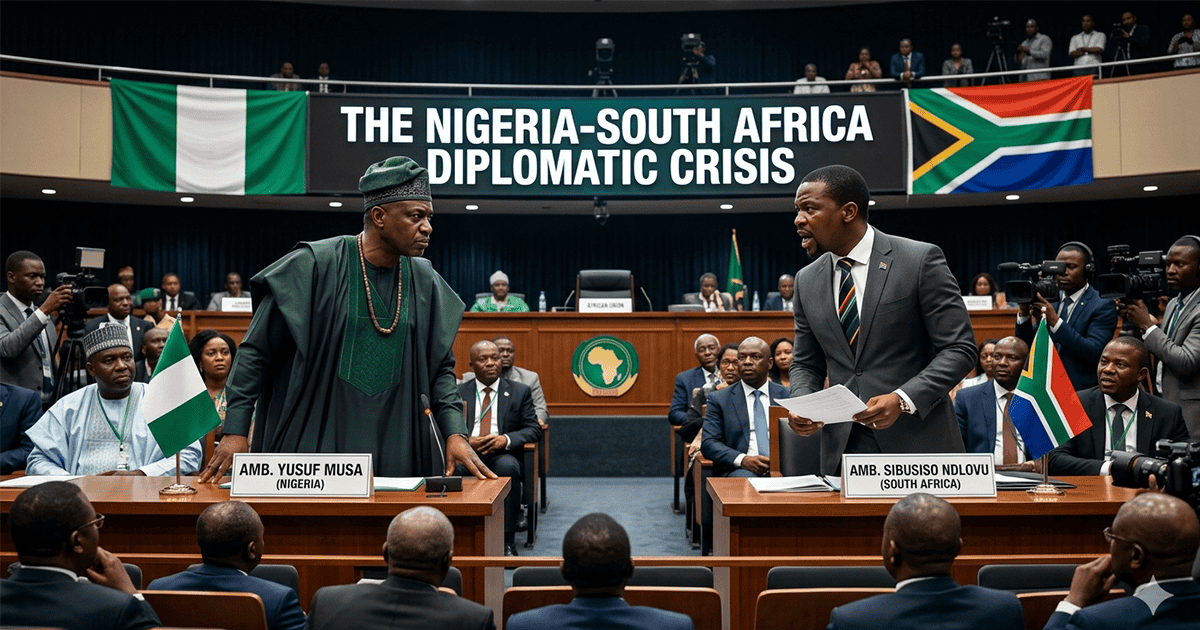


The Nigeria–South Africa diplomatic crisis has once again taken center stage, following a familiar but increasingly dangerous pattern. What began as localized anti-migrant protests in major hubs like Johannesburg and Pretoria has rapidly escalated into a full-blown humanitarian concern. As reports of looted shops and targeted violence against foreigners surface, the recurring issue of xenophobia in South Africa is forcing both nations to re-examine their long-standing relationship.
The Economic Roots of Xenophobic Tensions
To understand the current friction, one must look at the economic climate. With South Africa’s unemployment rate hovering above 30%, social frustration is at an all-time high. Unfortunately, migrants particularly Nigerians running small businesses often become the scapegoats for systemic economic failures. While some view these entrepreneurs as competitors, the reality is that blaming foreigners does nothing to solve structural inequality or job scarcity. Instead, it fuels a cycle of social tension that threatens the stability of the entire region.
Diplomatic Fallout: Abuja Demands Accountability
Nigeria’s response to this latest wave of violence has been swift and firm. By summoning South Africa’s acting high commissioner to Abuja, the Nigerian government signaled that the Nigeria–South Africa diplomatic crisis has reached a breaking point. Nigerian officials are no longer satisfied with diplomatic platitudes; they are demanding concrete protection for their citizens, transparent investigations into the attacks, and legal accountability for perpetrators. For many Nigerians, the time for reassurance has passed it is now the time for results.
This move marks a significant escalation in the Nigeria-South Africa diplomatic crisis, as officials from both nations scramble to prevent a total breakdown in bilateral relations.
The Human Cost: Fear and the Repatriation of Nigerians
Beyond the political headlines lies a harrowing human narrative. Nigerians living in South Africa are currently existing in a state of high alert, closing businesses early and avoiding public spaces to ensure their safety. This climate of fear has led to a significant surge in the repatriation of Nigerians. With over 130 citizens already indicating a desire to return home, the conversation is shifting toward potential evacuation plans. When hardworking individuals choose to abandon their livelihoods, it is a clear indicator that the situation has transitioned from uncomfortable to unbearable.
Economic Consequences and the Threat to African Unity
The fallout of this crisis is not limited to social unrest; it poses a direct threat to trade relations between Nigeria and South Africa. As public sentiment in Nigeria sours, South African brands operating within Nigeria may face consumer boycotts or retaliatory backlash. On a grander scale, this crisis undermines the very essence of African unity. If the African Union is forced to intervene, it will be a somber admission that the continent’s two largest economies are struggling to uphold the ideals of Pan-Africanism.
The Path Forward: Actions Over Words
The future of the Nigeria–South Africa diplomatic crisis hinges on South Africa’s willingness to address the root causes of the violence. While authorities have condemned the attacks, trust can only be rebuilt through visible, meaningful action. Addressing unemployment, inequality, and misinformation is the only way to prevent history from repeating itself. Until these systemic issues are tackled, the bond between these two giants will remain fragile, leaving real people to pay the price for political and social instability.
For now, the government is asking everyone to stay calm and not take out their anger on South African businesses here at home. But let’s be honest: as this Nigeria-South Africa diplomatic crisis continues to unfold, patience is running very thin.
Keep refreshing Sabon News. We’re tracking this story 24/7 to make sure you know exactly what’s happening with our brothers and sisters across the border.