


Booking a dream vacation to remote international destinations is exciting, but a sudden health emergency at sea can instantly turn a long-awaited trip into a financial nightmare. If you face a severe illness or a sudden injury in open waters, the bills pile up faster than you can imagine. Many travelers find themselves researching the true cruise ship medical evacuation insurance cost only after a crisis hits, but understanding the financial reality beforehand is the ultimate way to protect your hard-earned savings.
The short answer is yes, dedicated coverage is absolutely worth it. A maritime emergency helicopter extraction can easily cost between $20,000 and $50,000, while a long-range international private air ambulance back to your home country can surpass $100,000 to $200,000. Because standard health insurance plans and regular credit card coverages rarely pay for open-ocean transport, locking down an affordable cruise ship medical evacuation insurance cost up front is the only reliable way to secure peace of mind on the water.
The Reality of Maritime Medical Emergencies
When you are relaxing on a luxury cruise vessel, it is easy to forget how geographically isolated you truly are. While modern cruise liners are equipped with onboard medical infirmaries and basic stabilization equipment, they are not full-scale hospitals. They are designed to manage minor injuries and stabilize patients temporarily until they can be safely transferred to a proper land-based facility.
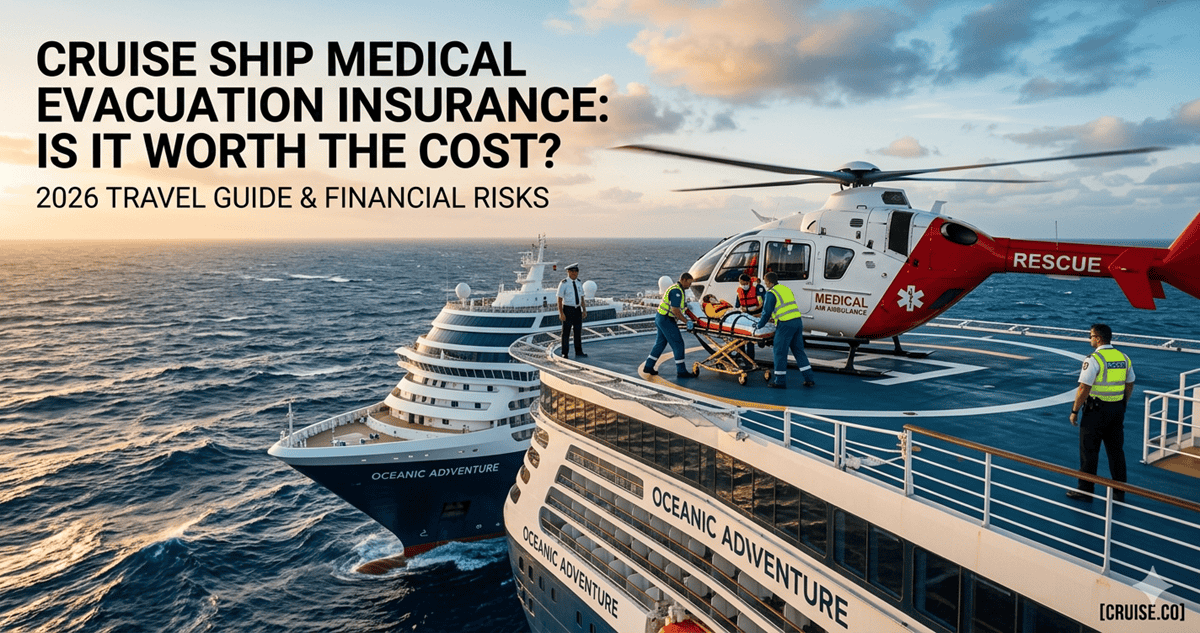
If a passenger experiences a critical medical event such as a stroke, a severe cardiac issue, or an unexpected infectious complication the onboard medical team has no choice but to request an emergency extraction. The logistical reality of pulling a critically ill patient off a ship moving through open waters is incredibly complex and requires specialized, high-cost aviation assets.
The true nature of this vulnerability became clear during recent global travel advisories, where travelers on remote routes fell critically ill with aggressive symptoms while far out at sea. Because the vessels lacked intensive respiratory infrastructure, multiple international medical evacuations had to be authorized. For general travelers on commercial routes, those high-level logistics translate directly into immense personal financial liability if they lack proper travel insurance emergency airlift protection.
Emergency Maritime Cost Breakdown
The pricing structure of maritime medical care catches most vacationers completely off guard. Onboard medical infirmaries operate as private clinics and charge completely out-of-pocket fees. These base diagnostic, room, and medication costs are billed directly to your cabin account and can accumulate at a rate of several thousand dollars per day.
If your condition requires an emergency extraction, the final bill scales based on your exact distance from land and the rescue entity involved. The responsive data matrix below outlines the average out-of-pocket financial reality of these critical events.
Emergency Service Type
Average Out-of-Pocket Cost
Standard Insurance Status
Shipboard Medical Center Care
$1,000 – $5,000+ per day
Rarely covered by domestic health plans
Coast Guard Helicopter Extraction
$0 – $25,000+ Free ($0) within U.S. Coast Guard territory; private rescue operators in international waters charge premium rates.
Private Air Ambulance (Regional)
$30,000 – $75,000
Requires dedicated travel insurance
Long-Range International Repatriation
$100,000 – $200,000+
Strictly out-of-pocket without premium policy
Standard Travel Policies vs. Premium Evacuation Riders
A common mistake among cruise-goers is assuming that any generic travel protection plan automatically covers complex maritime evacuations. It is vital to understand the structural differences between basic travel health packages and premium best cruise insurance for illness options before you buy. Choosing the correct itinerary requires knowing which fleets protect your health best. Read our updated rankings on the safest cruise lines for health and medical care to stay safe before booking your ticket.
Standard Travel Medical Insurance
A basic entry level travel policy is designed to cover local hospital bills, basic doctor consultations, and emergency prescriptions if you get sick while walking around a foreign port city. While it might include a small sub-limit for local ground ambulance transport, it rarely has the funding depth or structural language to manage a mid-ocean helicopter extraction or an international private ICU jet flight.
Premium Medical Evacuation Policies & Riders
Dedicated emergency medical transport plans focus entirely on moving a critically unstable patient from an inadequate medical setting directly to a high-tier facility. The best cruise insurance for illness scenarios won’t just pay the bill; it handles heavy logistics. These providers coordinate with the cruise line, deploy private fixed-wing aircraft staffed with advanced ICU nurses, secure international airspace permits, and guarantee admission to a terminal hospital back home.
Crucial Policy Clauses You Must Check
When reviewing insurance quotes via your provider portal, never skim past the fine print. To ensure your investment covers actual worst-case scenarios, verify the presence of these two critical legal clauses:
1. Hospital of Choice Clause
Most standard travel plans state that they will transport you to the nearest acceptable facility. In remote cruise corridors, the nearest hospital might lack basic surgical equipment, specialized physicians, or clean blood banks. A premium policy containing a “Hospital of Choice” clause guarantees that if you are stabilized but require ongoing long-term care, the provider will fly you directly to your preferred hospital close to your family.
2. Outbreak, Pandemic, and Quarantine Exemptions
As maritime travelers have seen firsthand during major historical health scares, cruise vessels can easily become subject to sudden lockdowns or quarantine orders. Many standard travel insurance policies explicitly exclude coverage for illnesses caused by diseases declared as public health emergencies or outbreaks. Make sure your contract specifically includes coverage for international medical repatriation coverage and unexpected quarantine costs stemming from onboard viral transmissions.
How to Choose the Right Coverage for Your Itinerary
Selecting your insurance plan should depend directly on your cruise itinerary. A casual three day cruise through the Bahamas requires a significantly lower evacuation limit than an extensive multi week expedition voyage to Alaska, the South Pacific, or the Antarctic Peninsula.
For standard Caribbean itineraries, a policy offering $250,000 in emergency medical evacuation coverage is typically sufficient to handle transport back to the United States mainland. However, if your itinerary moves into highly remote waters where private transport distances span thousands of open miles, you should look exclusively for premium plans that guarantee $500,000 to $1,000,000 in un-capped evacuation and repatriation benefits. Balancing your upfront cruise ship medical evacuation insurance cost against your true destination risks ensures that an unexpected illness remains a temporary roadblock rather than a lifetime of financial debt.
Frequently Asked Questions (FAQ)
Does standard travel insurance cover medical airlifts from a cruise ship?
Not automatically. Basic travel insurance policies often cover trip cancellations or minor medical emergencies at a local port clinic. To be protected from high open-ocean rescue fees, you must ensure your policy explicitly includes “Emergency Medical Evacuation and Repatriation” benefits with a coverage limit of at least $250,000 to $500,000.
How much does an emergency medical evacuation cost at sea?
The true cost of a maritime medical evacuation depends on your distance from shore. A local helicopter extraction to the nearest coastal hospital ranges between $20,000 and $50,000. If you require a private, medically staffed ICU jet to transport you back to your home country for specialized care, costs easily soar past $150,000.
Will my domestic health insurance cover me on a cruise ship?
Most domestic health insurance providers, including standard employer plans and Medicare, do not offer coverage outside your home country’s borders or in international waters. Any care received at the ship’s medical center or via emergency evacuation must be paid completely out of pocket unless you hold a valid international travel medical policy.
Stay informed and inspired with Sabon News, where every story is crafted to bridge gaps and foster empathy across our global community.
This Post Has One Comment
Pingback: Best Travel Health Insurance for Digital Nomads: 2026 Guide - Sabon News