

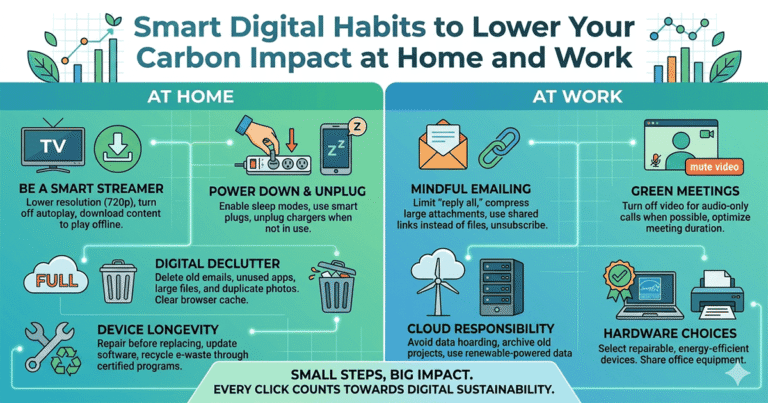
Small business owners juggling growth, tight margins, and nonstop digital demands rarely have time to think about the environmental impact of technology powering every email, file, and meeting. The tension is real: staying fast and responsive can quietly drive higher energy use and a bigger digital footprint, especially as data piles up and tools multiply. Mindful digital habits turn that pressure into a practical advantage by aligning daily operations with sustainable technology use. The payoff is simple and immediate: carbon footprint reduction that supports focus, control, and long-term credibility.
Quick Summary: Biggest Digital Carbon Wins
- Cut digital energy consumption by reducing unnecessary online activity and keeping workflows lean.
- Optimize data storage by deleting what you do not need and organizing files to avoid duplicate clutter.
- Choose eco-friendlier software by prioritizing tools that run efficiently and minimize background usage.
- Switch on energy-saving device settings to reduce power draw without sacrificing daily productivity.
- Handle e-waste responsibly by repairing, reusing, recycling, and disposing of old tech the right way.
Assess and Shrink Your Digital Footprint Fast
This process helps you spot the digital habits that quietly drive energy use, then replace them with simpler, cleaner defaults at home and at work. For small business owners and tech-curious readers tracking global sustainability shifts, it’s a practical way to cut waste now while staying aligned with where policy and markets are heading.
- Track your digital “hot spots” for 7 days
Start by listing your biggest tech energy and data drivers: always-on devices, video calls, cloud storage, marketing files, and backups. Keep it simple: note what you use, how often, and what stays running after hours. This gives you a baseline so you can tell which changes actually move the needle. - Do a quick energy audit of your tech stack
Conduct an energy audit by checking device settings, idle time, and anything plugged in 24/7, including routers, monitors, printers, and chargers. Pick the top three “always-on” items and decide what can be scheduled, auto-slept, or powered down. This step turns vague guilt into a short, doable fix list. - Tune home and office power settings as your new default
Choose power-saving modes on laptops and desktops, set displays to sleep quickly, and enable automatic shutdown at the end of the day where possible. Reduce high-bandwidth habits when you can by turning cameras off for large meetings or switching some updates to audio-only. These tweaks are small, but they compound because they run every day without extra willpower. - Clean up data so you store less and search faster
Create one shared folder structure, then archive or delete duplicates, old exports, and unused downloads. Build a recurring habit to schedule delete days so storage does not grow endlessly in the background. Less digital clutter also means quicker collaboration and fewer “where is that file?” messages. - Confirm results and lock in two monthly check-ins
At the end of two weeks, compare your baseline notes with what changed: fewer always-on hours, fewer giant attachments, leaner storage, and calmer device use. Pick two metrics you can reliably track such as device uptime and total shared-drive size, then review them once a month. This keeps your footprint reduction measurable, not just aspirational.
Sustainable Tech Habits That Actually Stick
These habits turn one-off settings tweaks into daily sustainable digital routines you can trust, even when business gets busy and headlines shift. For small business owners and tech-curious readers following global climate and policy signals, they make footprint reduction feel practical, measurable, and repeatable.
Two-Minute Power-Down Sweep
- What it is: End the day by turning off monitors, speakers, and unused chargers.
- How often: Daily.
- Why it helps: It cuts idle electricity use without adding new tools.
Camera-Optional Meetings
- What it is: Default to audio-first unless the meeting needs faces or demos.
- How often: Per meeting.
- Why it helps: Lower bandwidth reduces data transfer and device load.
Inbox and Attachment Diet
- What it is: Replace big attachments with shared links and delete stale threads.
- How often: Twice weekly.
- Why it helps: Less storage and searching means less background computation.
Cloud Folder Prune
- What it is: Delete duplicates, compress archives, and set retention rules for old exports.
- How often: Weekly.
- Why it helps: It keeps data lean, fast, and easier to govern.
Lightweight Power Management Check
- What it is: Review sleep settings and consider reducing energy consumption features for always-on gear.
- How often: Monthly.
- Why it helps: Small controls can compound into meaningful savings.
Quick answers for common digital footprint worries
Q: What are some easy steps to reduce energy consumption through device settings at home and in the office?
A: Turn on auto-sleep for screens, shorten display timeout, and enable “power saver” on laptops and phones. Set desktops and printers to sleep after short idle periods and disable “wake on network” if you do not need it. These tiny defaults matter because 3.7% of all greenhouse gas emissions come from devices, the internet, and supporting systems.
Q: How can minimizing unnecessary data storage and cloud usage contribute to lowering my digital carbon footprint?
A: Keeping fewer duplicates and old exports means less background syncing, indexing, and server storage running 24/7. Start with a low-risk pilot: delete redundant files, compress archives, and set simple retention rules for logs and recordings. If you are unsure what is safe to remove, move it to an “expire in 30 days” folder first.
Q: What criteria should I consider when choosing greener technology options to replace older devices?
A: Prioritize longevity: repairability, long software support windows, and solid battery health all extend usable life. Compare energy efficiency ratings, and choose devices that meet your actual workload so you are not powering extra hardware you never use. Also consider reuse plans like redeploying older gear for lighter tasks or responsible recycling.
Q: How can I perform a personal audit of my digital habits to identify the biggest opportunities for environmental impact?
A: Track one workweek of high-bandwidth actions: long video calls, large attachments, frequent backups, and always-on tabs. Pick the top two offenders and test one change each, like audio-first meetings or link-sharing instead of attachments. The scale is real, since each year, the internet emits 1.6 billion greenhouse gas emissions, but your biggest wins often come from a few repeat behaviors.
Q: What if I feel overwhelmed by managing multiple responsibilities and want a structured way to adopt sustainable digital practices effectively?
A: Shrink the scope: choose one habit, define “done” in 2 minutes, and attach it to an existing routine like shutting down for the day. Use a simple scorecard like 3 checkboxes per week, then add a second habit only after two steady weeks. If you want extra structure, an optional learning path in basic management fundamentals, such as business management degree tracks, can help you plan change, set clear ownership, and keep improvements from slipping.
Turn Mindful Tech Use Into Measurable Digital Sustainability Habits
It’s easy to care about the planet and still feel stuck using the always-on tools that keep work moving. The way through is a commitment to digital sustainability built on mindful tech use: small, repeatable choices that fit real life, supported by simple reflection instead of guilt. Put into practice, empowering digital change shows up fast, less wasteful digital noise, clearer decisions, and long-term eco-friendly habits that don’t depend on willpower. Small tech habits create real climate impact when they’re repeated, not rushed. Choose 3 immediate environmental actions today, then track what changes for one week and keep what feels sustainable. That follow-through builds resilience, more focus, steadier operations, and a lighter footprint as your business grows.
Stay informed and inspired with Sabon News, where every story is crafted to bridge gaps and foster empathy across our global community.

This Post Has One Comment
Pingback: How Smart HVAC Thermostats Are Revolutionizing Home Comfort And Power Efficiency - Sabon News