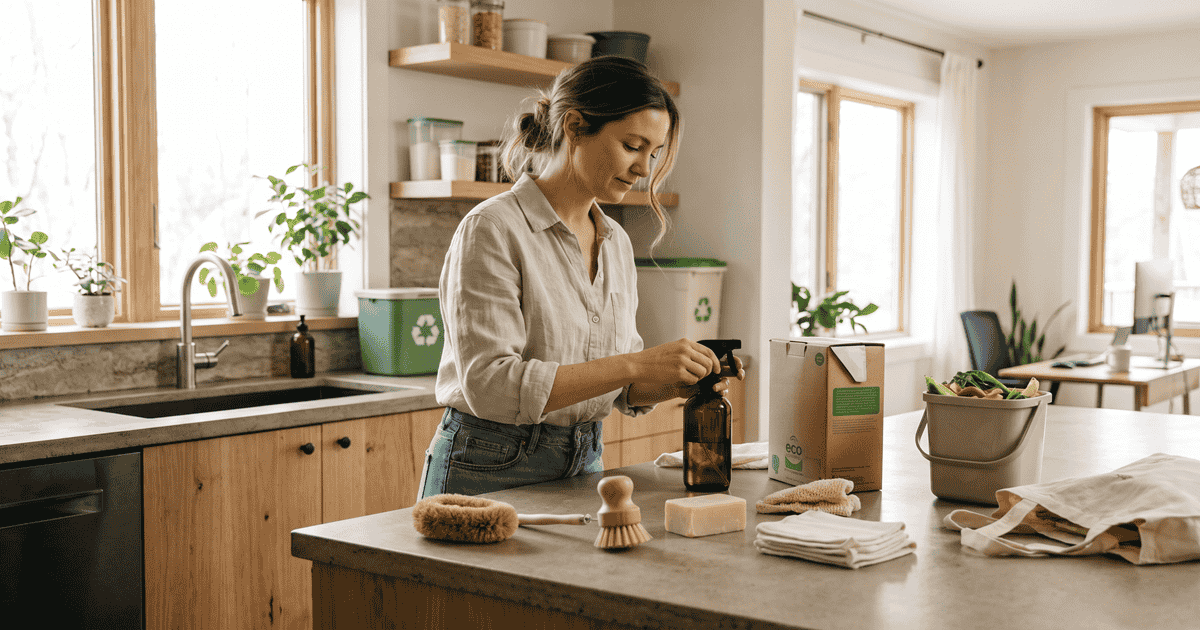


We all think about our carbon footprints in terms of gas, flights, and energy. Cleaning rarely makes the list, but there is a huge impact from the way we wipe and wash, run the laundry and vacuum, and take care of our air and ventilation systems. Lucky for us, we can easily lessen our impact by changing our habits and not having to give up the freshness of our homes and workplaces.
Cleaning for impact means being intentional. It means strategically picking better products, using less water and disposable items less, and taking care of the systems in our buildings that move air through them. One of the biggest but most ignored of these systems is the HVAC system, and the ductwork in particular.
In this guide, we will share achievable strategies for you to implement this week, whether you’re cleaning a kitchen at home or a kitchen in the office. We want to help you lighten your footprint, while keeping your space as clean as ever!
Your Cleaning Habits Have a Larger Carbon Footprint Than You Realize
Each cleaning task has an invisible supply chain. Each time you clean, you contribute to greenhouse gas emissions. A spray bottle has chemicals that take energy to make and transport. Mopping requires hot water that takes energy to make. Then, there are the paper towels. They were made from trees, bleached, packaged, and transported to the store. Lastly, there is the landfill where they will add to greenhouse gasses as they decompose.
Water heating is the largest energy use in the home. Making hot water, and then running it through a dishwasher or cleaning a surface pushes that number higher. In commercial buildings, these effects are magnified. Large floor spaces and high turnover necessitate frequent cleaning. This increases the energy use even more.
There is also the issue of indoor air quality. Over time, dust and other particles get caught in vents and ducts. Your HVAC system pulls air through all of this. When it gets clogged, it takes longer to get the temperature of a space to where it needs to be. That means more energy is used and more emissions are created.
Understanding the effects of your cleaning habits can help change them in a meaningful way.
Consider Greener Options for Cleaning Products
Purchasing the right cleaners for your home can help reduce your impact for years to come. The first step is assessing which products you can do without. You may be surprised to see that with a few simple cleaners and some vinegar or baking soda, you can clean your entire home.
An added benefit of using fewer cleaners is using less packaging, needing fewer shipments, and creating less clutter in your home.
While you do eventually need to buy cleaners, there are a few strategies to reduce your environmental impact. Look for cleaners that:
- are concentrated, requiring you to add water to use them,
- offer refills,
- use plant-based ingredients,
- have third-party eco-labeling,
- and/or have minimal or recyclable packaging.
Beyond your cleaners, there are many tools you can buy that are better for the environment and last for many years. For example, while paper towels may be cheaper in the short term, a reusable microfiber cloth can last many years. Washable mops and pads and natural fiber brushes and scrubbers are also great replacements for disposable tools. A good, thoughtful purchase can even pay for itself.
Most importantly, your goal should be to simply buy what you need. This will help ensure your supplies aren’t expired and that you aren’t creating more waste than necessary.
Consider Water and Energy Use for Everyday Cleaning
How you clean is important and can affect the environment even if the products you use are eco-friendly. The biggest levers you can pull are water and energy. Luckily, they are fairly easy to adjust.
For temperature, the majority of laundry can be cleaned just as effectively in cold water. Many detergents these days are made to be used with cold water. Switching your washing temp from hot to cold can save a good amount of energy. The same concept applies to mopping and general wiping. Warm water is rarely necessary. For everyday messes, cool water is usually just fine.
Think about full loads for water and energy use. Be sure to run your dishwasher and washing machine only when they are completely full. Consider skipping the drying cycle. If you use a dryer, be sure to clean the lint trap after every load, so air can freely flow through the dryer and it doesn’t waste energy.
Here are some more ideas for habits with water and energy savings:
- Use a bucket to collect water when cleaning instead of letting the water run.
- Scrape food off dishes instead of washing them with hot water.
- Use a broom or vacuum to remove dust and debris before wet mopping in order to use less water.
- Use daylight to clean, if possible, to reduce use of artificial lighting.
- Unplug or switch off the equipment you are finished using.
Before leaving this topic, I should talk a little about vacuums and cleaner maintenance. A vacuum with a clogged or full bag or filter works much harder to do its job and loses suction. Regularly cleaning the filters and replacing the belt keeps it running at its best and prolongs its life.
These habits may seem very small, but if they are adapted by enough people, they can make a big difference in the use of resources.
Now I’ll address why air duct cleaning needs to be part of your regular routine.
Debris and dust can accumulate in ductwork over time, along with pet hair and even small amounts of moisture. This buildup limits airflow, which causes your furnace and air conditioner to overwork, raising your energy usage. Air duct cleaning removes this buildup, improving airflow and allowing your systems to use less energy. This can result in more even temperature distribution throughout your house as well as fewer cycles of your HVAC system turning on and off.
Air duct cleaning at reasonable intervals has sustainability benefits, such as:
- Reduced energy usage
- Increased lifespan of HVAC equipment
- Decreased usage of HVAC filters
- Improved air quality in your home
It’s suggested that homes get their air ducts cleaned every 3-5 years, but homes with pets, smokers or allergy sufferers may want to get theirs done more frequently. Homes undergoing renovations may also want to get their ducts cleaned more frequently. Frequent construction or heavy traffic near your commercial building may warrant more frequent air duct cleanings, as well. A good air duct cleaning service will be able to inspect your ducts and tell you if cleanings are needed.
If hiring a company, research their methods. Look for teams using high-efficiency vacuums, avoid chemical treatments and dispose of debris responsibly. The best results are from regular, upkeep air duct cleaning, combined with the use of properly installed and regularly replaced filters.
Create Sustainable Cleaning Habits
Cleaning has been standardized in offices, shops, clinics and warehouses. While this makes sharing cleaning responsibility with colleagues easier, consistency is harder to achieve. Good sustainable cleaning habits can be easily adopted across an entire team.
Conduct a simple audit. Walk through your space and observe the products used, how much packaging the products have, and which areas are cleaned excessively. Many workplaces over-clean low traffic areas, and under-maintain HVAC units, ductwork and other systems that affect the health and comfort of employees.
You can create new and improved habits with the following practices:
- Purchase the right products. Limit the products used to a few, low-impact products, and purchase them in bulk.
- Provide reusable mop heads. Set up a system to launder mop heads.
- Schedule cleanings. Clean based on actual use and need.
- Add HVAC ductwork. Add ductwork cleaning to your annual maintenance.
Train your staff. Educate your staff on proper cleaning, dilution ratios, waste disposal and other good cleaning habits.
Getting your staff to help implement these ideas is also really effective. Many of the places that I worked with would set up systems where staff could write up their suggestions and tips to improve the processes, or to add questions. Employees usually went above and beyond to support the ideas, especially if they understood the reasoning behind it. A specific example would be tracking results. Let’s say an improvement led to a reduction in supply orders. That results in a boost in staff morale, and additional motivation to continue the improvement efforts.
Property Managers and Business Owners also see improvements to their bottom lines. Efficient HVAC Systems use less product, and lead to less waste, which lowers costs. There are many aligning interests of a budget and sustainability goals.
Conclusion: Many Small Actions Can Really Move the Needle
Being more sustainable doesn’t require you to overhaul your entire life. It requires you to be mindful of the smaller, daily habits you have. Using fewer, more sustainable products is better. Also using reusable tools and aids instead of disposable ones is better. Other habits like only running full loads of laundry or using cold water or simply stopping your tap from running are also incredibly effective. Paying attention to hidden systems in your building like your ductwork can also be beneficial when trying to improve air quality. There are many choices you can make in your building that improve air quality and help the environment as well.
Author: Sara William, a digital marketing consultant, writer, freelancer, WordPress enthusiast, and coffee lover.